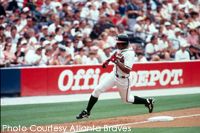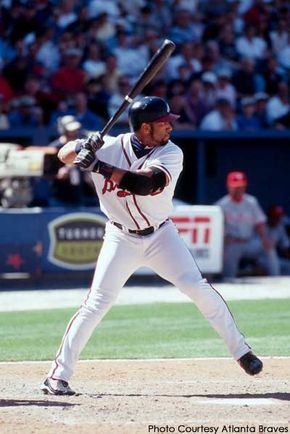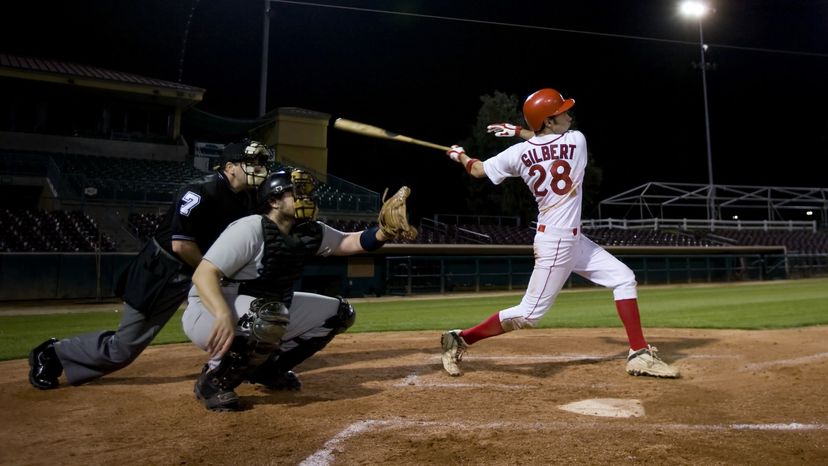
Baseball is a game played with a bat, ball and glove. The fundamentals of the game involve throwing the ball, hitting the ball, and catching the ball. Of course, the execution of these three tasks is more challenging than it sounds, and it is that challenge that compels baseball players to play the game.
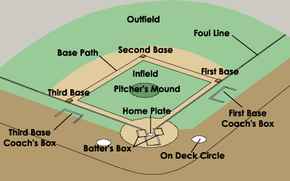
In this article, we will explain the complex game of baseball, review some of the basic rules and the equipment used and lay out the geography of a baseball field.
Advertisement
Baseball Basics
Unlike most games, a running clock does not limit the length of a baseball game. The two competing teams play over a period of innings, which are subdivided into halves. Professional and college games are generally nine innings long.
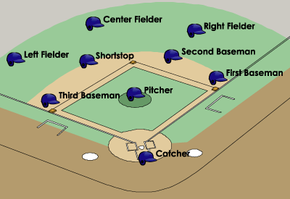
During the first half of each inning, the visiting team bats and attempts to score points, called runs, while the home team players take their respective defensive positions in the field. The defense's goal is to get the offensive team's players "out" in a variety of ways. After three outs are recorded, the teams switch -- the offensive team moves to defense, and the defensive team moves to offense. The batting team sends one player at a time to try and hit the ball.
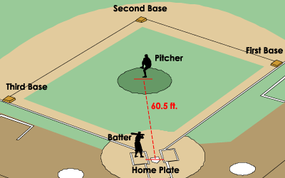
The engine of the sport is composed of two players -- the pitcher and the batter. All of the action in a baseball game revolves around these two combatants. The pitcher stands on a raised mound of dirt, called the pitcher's mound, which is 60 feet 6 inches (18.4 meters) from home plate in Major League Baseball. The batter stands on either side of the home base, called "the plate," holding a bat and facing the pitcher.
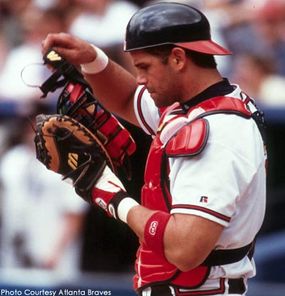
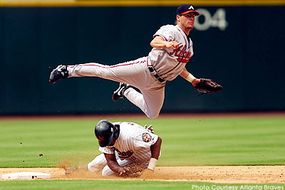
To set the game in motion, the pitcher attempts to throw the ball past the batter into the catcher's glove or make the batter hit the ball to put it in play. As the ball is put in play, the eight fielders try to catch it or throw out the batter (more on this later) so he can't get on base and ultimately score a point (a run). The batter's goal is to put the ball in play so that the eight fielders can't catch the ball or throw it to another fielder to record an out.
Now that you have a basic understanding of how the game works, let's take a deeper look into the game of baseball, starting with the basic equipment.
Advertisement