Photo courtesy Consumer Guide Products
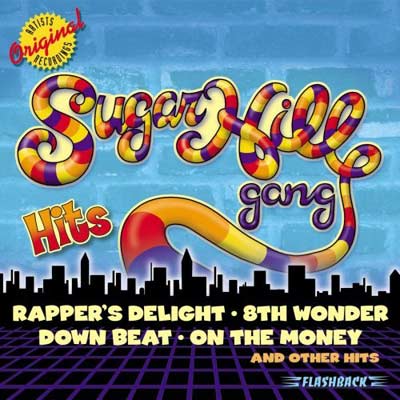
The Sugarhill Gang's Rapper's Delight was the first hip-hop song to go gold.
"I said a hip hop
the hippie the hippie
to the hip hip hop, you don't stop the rock it
to the bang bang boogie, say up jumped the boogie
to the rhythm of the boogie, the beat"
It's possible you're at a crossroads right now between finishing the lyrics to this song and reading this article. Go ahead; sing a little more if you can -- we're right there with you …
"Now what you hear is not a test -- I'm rappin' to the beat
and me, the groove, and my friends are gonna try to move your feet
see I am Wonder Mike and I'd like to say hello
to the black, to the white, the red, and the brown, the purple and yellow"
Finished yet? No?
"But first I gotta bang bang the boogie to the boogie
say up jump the boogie to the bang bang boogie
let's rock, you don't stop
rock the riddle that will make your body rock …"
If you made it to this verse and still have more lyrics in you, then you probably know these are from one of the first hip-hop, or rap, songs ever recorded -- "Rapper's Delight" by The Sugarhill Gang. You might remember the song from when it first hit the airways sprinting toward gold, or maybe you're flashing to a little old lady in the Adam Sandler movie, "The Wedding Singer." While it's true that in October 1979 this was the first hip-hop song to garner gold, it by no means represents the beginning of hip-hop.
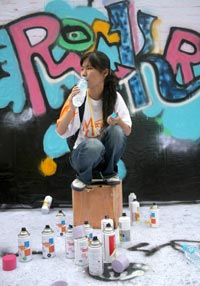
Global Graffiti With the aid of the Internet, graffiti has gone global. Web sites like Art Crimes, @149st, Aero, Éiresol Style
and many others unite taggers from around the world. Most sites include
vast archives of photos, and you'll also find blogs, videos, articles,
newsletters and interviews. |
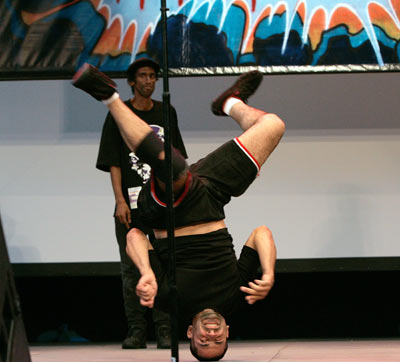
Another thing to clear up is this: If you think hip-hop and rap are synonymous, you're a little off the mark. While it's accurate to say that rap is hip-hop, it's not entirely accurate to say that hip-hop is rap. Hip-hop is a cultural movement akin to Art Deco and the Harlem Renaissance, and, much like these movements, it incorporates several elements. Most hip-hop historians speak of four elements of hip-hop: tagging (graffiti), b-boying (break dancing), emceeing (MCing) and rapping. One of the visual elements -- graffiti -- technically came first, but at that time it wasn't part of hip-hop culture because hip-hop didn't exist. DJing and MCing (and eventually rapping) started the hip-hop movement, with dance and style following closely thereafter.
If you look at the movement from its beginnings up to today, you'll see that these elements have expanded into broader terms:
- Visual art, which includes graffiti as well as other graphic arts and film
- The written and spoken word, which includes MCing, rapping and performance poetry
- Physical movement, which includes a variety of hip-hop dance styles
- Style, which includes clothing and other objects of fashion
Lyrics aren't the only words of the hip-hop movement. Poetry has also
found a home in hip-hop, by way of spoken word -- the process of
reciting original poetry or the work of another in front of a group or
audience. It should be noted that performance poetry isn't confined to
the realm of hip-hop, but it has steadily been gaining footing within
the movement for many years. If you've seen an episode of Russell
Simmons' HBO TV series, Def Poetry Jam, which premiered in 2002, then
you know what it is. A number of noted poets and celebrities have
appeared on the show, including Amiri Baraka, Ani DiFranco, DMX, George
Clinton, Erykah Badu, Kanye West, KRS-One, Lou Reed, Nikki Giovanni,
Smokey Robinson, Sonia Sanchez and Wyclef Jean.
In this article, we'll take a closer look at each of the elements of hip hop. But first, let's go back -- way back -- and explore the beginnings of this 30-year-old movement.
Advertisement