Oracle Cards vs. Tarot Cards: What's the Difference?

By: Isla Brevant  | 
There's order to tarot, but an oracle deck is a little more freestyle. Sadie Mantell / Shutterstock

The question of oracle cards vs. tarot cards might sound like a cage match between two spiritual heavyweights, but these divination tools actually serve different vibes.

Both offer insight to believers, both tap your intuition, and both involve drawing cards with compelling imagery. But the structure and purpose behind each one set them apart.

Advertisement

What Is the Difference Between Tarot and Oracle Cards?

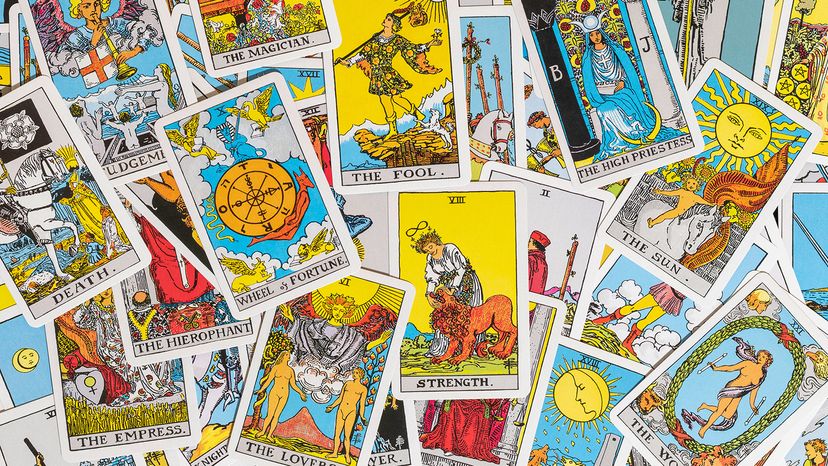
Tarot cards follow a specific structure: a 78-card deck split into the major arcana (22 cards) and the minor arcana (56 cards). The minor arcana is divided into four suits—wands, cups, swords, and pentacles—with numbered cards one to ten and four court cards (page, knight, queen, king) in each suit.

This set structure makes tarot a more structured divination tool, where each card represents a defined concept. Many people turn to tarot for deep insight into relationships, goals, and emotional patterns.

Advertisement

Oracle cards, by contrast, are like jazz: looser, more expressive, and full of surprises.

There’s no set number, specific structure, or universal format. Many oracle decks range from 30 to 100+ cards, often with keywords, phrases, or themes instead of suits and numbers. You might find decks focused on angel cards, animals, chakras, or spiritual guidance.

These decks are typically more intuitive, and you can interpret the card meanings in a way that fits your life without needing to study a complex system.

Advertisement

History and Evolution

The first tarot deck designed for divination emerged in the 18th century, though playing cards resembling tarot go back to the 1400s. Tarot became a staple of spiritual practices and esoteric studies, blending astrology, numerology, and even elements of alchemy.

Today, most decks follow the Rider-Waite-Smith model, with familiar symbols and a rich system of interpretation.

Advertisement

Modern oracle decks, however, reflect a much broader range of ideas. Some focus on daily affirmations or emotions, while others incorporate mythology or pop psychology.

Oracle is often used for self-development and personal empowerment. It’s especially helpful if you're looking for open-ended questions and flexible responses.

Advertisement

How to Use Each Deck

In a tarot reading, you typically use a tarot spread, placing cards in specific positions to answer a question or explore a situation. Each card’s placement, along with its suit, number, and orientation (upright or reversed), contributes to the interpretation.

Tarot cards follow clear systems, and while there’s room for intuition, many readers spend years mastering the traditional meanings.

Advertisement

With oracle, the approach is looser. You might draw one card as a daily message or pull several to explore a theme. Whichever deck you use, the key is to let your own intuition guide you. Some readers even combine both tools: using tarot for structure and oracle for extra context or emotional tone.

What Kind of Guidance Do They Offer?

Both tarot and oracle decks are used for insight, reflection, and sometimes even decision-making. They are often used to gain insight and better understand the present, but there is no scientific evidence that tarot or oracle cards can offer genuine clues about future events.

Tarot tends to provide more detailed context (the "how" and "why"), whereas oracle cards usually offer straightforward messages that highlight the overall feeling or lesson.

Advertisement

Whether you're reading about your daily life or long-term goals, either system can deliver powerful signs and help you discover your inner voice.

Which Deck Should You Choose?

It comes down to personal preference. Do you like structure, consistency, and depth? Start with a tarot deck. Do you prefer open-ended messages and quick insights? Go with an oracle deck.

Still unsure? Try both. Many people mix systems or keep different decks for different moods. Some choose a beautiful deck just because they feel drawn to the artwork—and that’s a perfectly valid reason.

Advertisement

Whether you use many decks or stick to one, what matters is that the system works for you. The best practice is the one you’ll actually use.

We created this article in conjunction with AI technology, then made sure it was fact-checked and edited by a HowStuffWorks editor.

Advertisement

Advertisement

Loading...