The Youngest Olympian Was an Unnamed 7-Year-Old

By: Isla Brevant  | 
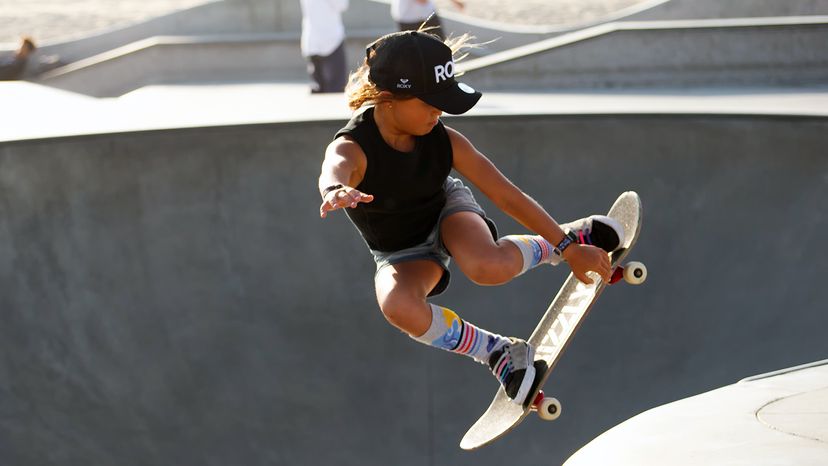
Sky Brown became one of the youngest Olympic medalists of all time when she won a bronze medal at the age of 13, but a handful of athletes competed (and won) at even younger ages. Jon Nicholls Photography / Shutterstock

While the name of the youngest Olympian ever remains a mystery (more on that in a moment), there's still a long record of extremely young athletes who have managed to qualify, compete, and even win medals at the Olympic Games.

Across modern Olympic history, the youngest athletes have appeared most often in the Summer Games, especially in sports like gymnastics, skateboarding, swimming, and rowing.

Advertisement

Ordered from youngest to oldest, this list highlights the youngest documented Olympians, medal winners, and notable competitors.

1. Unknown Boy (Age 7, 1900)

This boy (who has never been definitively identified) served as a substitute coxswain in a rowing event and helped the Dutch crew win gold, likely making him the youngest Olympic gold medalist in history.

Advertisement

2. Dimitrios Loundras (Age 10, 1896)

Dimitrios Loundras is widely recognized as the youngest documented Olympian in history.

He competed in gymnastics at the first modern Olympic Games in 1896 and won a bronze medal in the team competition. His achievement makes him the youngest ever medal winner in Olympic history.

Advertisement

3. Luigina Giavotti (Age 11, 1928)

Italian gymnast Luigina Giavotti competed in the 1928 Summer Games. At just 11 years old, she won a silver medal in the women’s team gymnastics event, setting a record for the youngest female athlete ever to medal.

Advertisement

4. Inge Sørensen (Age 12, 1936)

Inge Sørensen represented Denmark in swimming at the 1936 Summer Games. At age 12, she won a bronze medal, becoming the youngest swimmer to stand on the Olympic podium.

Advertisement

5. Carla Marangoni (Age 12, 1928)

Carla Marangoni competed in gymnastics at the same Olympic Games as Giavotti.

She was 12 years old when she helped Italy win silver in women’s team gymnastics, cementing her place among the youngest Olympic competitors.

Advertisement

6. Kokona Hiraki (Age 12, 2021)

Japanese skateboarder Kokona Hiraki made her Olympic debut at the Tokyo Olympics.

At age 12, she won silver in women’s skateboarding, making her the youngest medalist of those Games and one of the youngest athletes ever to win silver.

Advertisement

7. Sky Brown (Age 13, 2021)

Sky Brown represented Great Britain in women’s skateboarding at the Tokyo Games. At 13 years old, she won a bronze medal, becoming Great Britain’s youngest ever Olympic medalist.

Advertisement

8. Klaus Zerta (Age 13, 1960)

Klaus Zerta competed in rowing for Germany at the 1960 Olympics. He won gold as a coxswain at age 13, showing how team roles sometimes allow very young athletes to compete.

Advertisement

9. Marjorie Gestring (Age 13, 1936)

Marjorie Gestring competed in diving for the United States. At age 13, she won gold, making her the youngest individual Olympic gold medalist in modern Olympic history.

Advertisement

10. Nadia Comaneci (Age 14, 1976)

Nadia Comăneci competed in gymnastics at the 1976 Summer Games in Montreal.

At 14, she earned perfect scores, won multiple medals, and reshaped how the world viewed youth, discipline, and excellence in Olympic competition.

Youngest Athletes by Sport

Gymnastics, skateboarding, swimming, and rowing coxswain roles have produced many of the youngest Olympians.

Track and field and football, by contrast, rarely feature competitors under the age of 16 due to physical demands.

Age Rules in the Modern Olympics

Age limits are now more common, often in the name of safety concerns for young competitors.

Following debates about children in elite competition, the International Olympic Committee and individual sport federations introduced minimum age rules. These changes explain why extremely young Olympians are rarer in recent Games like Tokyo and Paris.

Why the Youngest Olympians Matter

The youngest Olympians capture attention because they challenge expectations.

Their stories raise questions about coaching, discipline, family support, and athlete welfare, while also celebrating extraordinary talent on a global stage.

We created this article in conjunction with AI technology, then made sure it was fact-checked and edited by a HowStuffWorks editor.

Advertisement

Loading...