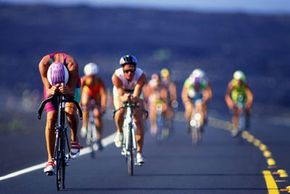
It was once the pinnacle of human endurance sports, a grueling distance that pushed athletes to the very edge of their limits: the marathon. But today, that 26.2-mile (42.2-kilometer) race takes a backseat to an even more daunting endeavor, a multisport trial so difficult that anyone who even manages to complete it will be known for the rest of his or her life as an Ironman.
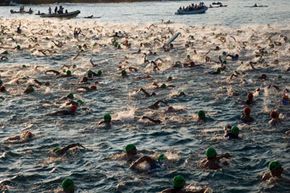
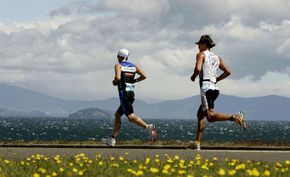
How tough is an Ironman triathlon? Imagine yourself running a full marathon. Unless you're in great shape or have trained for it, that probably seems pretty difficult. An Ironman race starts out with a 2.4-mile (3.9-km) swim. Following that, the competitors take a 112-mile (180.3-km) bike ride. When they finish that leg, they hop off their bikes and run a full marathon.
Advertisement
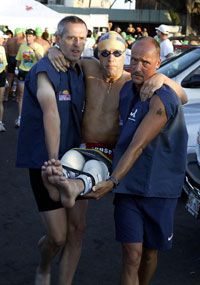
The competitors have a total of 17 hours to accomplish this feat. Top male Ironmen can finish in eight-and-a-half hours, while female winners generally take just more than nine hours. But the Ironman isn't just a race for superhuman beings in the peak of physical health. People with physical disabilities have completed the Ironman, including amputees, people in wheelchairs and one man who carried or pushed his disabled son the entire way. People in their 70s and 80s enter Ironman races (and finish them). There are a few professional triathletes who actually make a living running in Ironman events, but the vast majority of competitors are amateurs who fit their training schedules around work and personal life.
Since the original Ironman in Hawaii in 1978, triathlon has spread around the world. There are officially sanctioned Ironman events on every continent (except Antarctica), plus hundreds of other triathlons. Triathlon is even an Olympic event.
In this article, we'll meet some of the amazing (some say insane) people who compete in Ironman races, learn about the history of Ironman, and find out what it takes to train for one of these competitions.
Advertisement