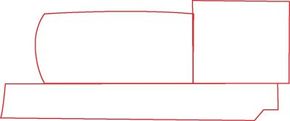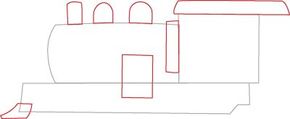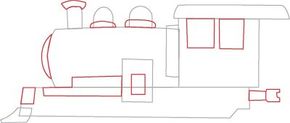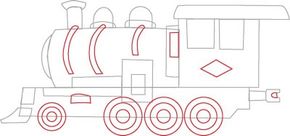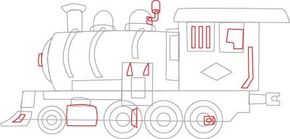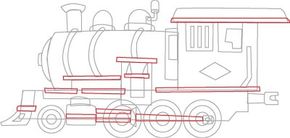
Drawing can be fun -- and it's not as hard as you may think. One of the secrets of drawing is that any object can be broken down into its smaller parts.

By following these step-by-step instructions, you can use this secret to learn to draw many different kinds of trains. By copying these pictures, you will learn basic drawing skills. You will be able to use those skills to draw other trains... or even other objects!

How to Draw a Train Caboose
Learn to draw this caboose and more with our easy instructions.

Before you start drawing, there are some basic tools you need. Make sure you have a pencil, a pencil sharpener, an eraser, a felt-tip pen, and grid paper where you'll make your drawings.

Throughout this article, the sketches start with larger basic shapes. Draw the full shape, even if all of it will not be seen in the final drawing. You can erase the part you don't need later.

Each consecutive step adds more detail until you have the finished drawing. The steps are colored to show exactly what to draw when: The drawings for each new step are shown with red lines, while the lines from previous steps are shown in gray.

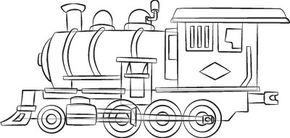
After all the steps are drawn, use a felt-tip pen to trace the pencil lines. Go over only the lines you need in the final drawing. After giving the felt-tip ink some time to dry so it won't smear, use an eraser to erase the extra pencil lines.

And there's your completed picture! The next step is learning to color the train.

Start off by using coloring tools that are familiar to you. For example, if you enjoy coloring with crayons, use them. When you get more comfortable with coloring, you can try other methods like colored pencils, watercolor paints, markers, or even colored chalk. Try different techniques on the drawings to see what looks best.

When you are ready to start coloring, pick colors that seem to fit the drawing best. Start by lightly adding the main color to the drawing. Remember to keep the colors light at first -- it is much easier to make a color darker than it is to make it lighter.

After the main color is finished, gently add darker colors to areas on the train that would be in shadows or less light. Adding colors this way is called shading, and it helps the drawing to look more realistic.

After shading the drawing, add lighter colors where more light would be. This is called highlighting, and it is usually done on the top areas of the shapes in the drawing. Think of sunlight coming down and lighting the train from above.

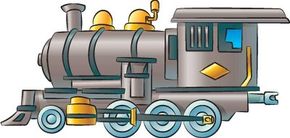
Look at the color pictures in the article and try to copy the light and dark shading of the colors. Once you fill in all the colors, your illustration is complete!

In this article, you'll learn how to draw several different kinds of trains, from steam engines to bullet trains. Here's a preview:
  • How to Draw Steam Engines
    Steam into the past with our first project. Recall the early days of the railroad while you learn to draw steam engines.

  • How to Draw Boxcars
    Now that you've mastered steam engines, you're ready to make the whole train. Add boxcars to your railroad, and you'll really be in business.

  • How to Draw Tanker Cars
    Mix things up with your train's cargo load -- add a tanker car or two with these easy instructions.

  • How to Draw Bullet Trains
    Faster than a speeding bullet! Learn to draw these quick trains, the newest thing in railroad transportation.

  • How to Draw Flatcars
    Give your trains more cargo room with this project. Learn to draw flatcars, and then your trains can haul nearly anything.

  • How to Draw a Caboose
    No train is complete without its final car. Bring up the rear with this easy-to-draw caboose.

  • How to Draw a Diesel Engine
    Diesel engines are a common sight on modern railways. Learn to draw them with these simple instructions.

Full steam ahead! Let's get started with our first project -- on the next page, you'll find easy instruction for drawing a steam engine.

Want more help learning to draw? See: